What First Home Buyer Grants Are Available in Australia?
Every state and territory runs its own First Home Owner Grant, with amounts from $0 to $50,000. See the full state-by-state breakdown, as at July 2026.

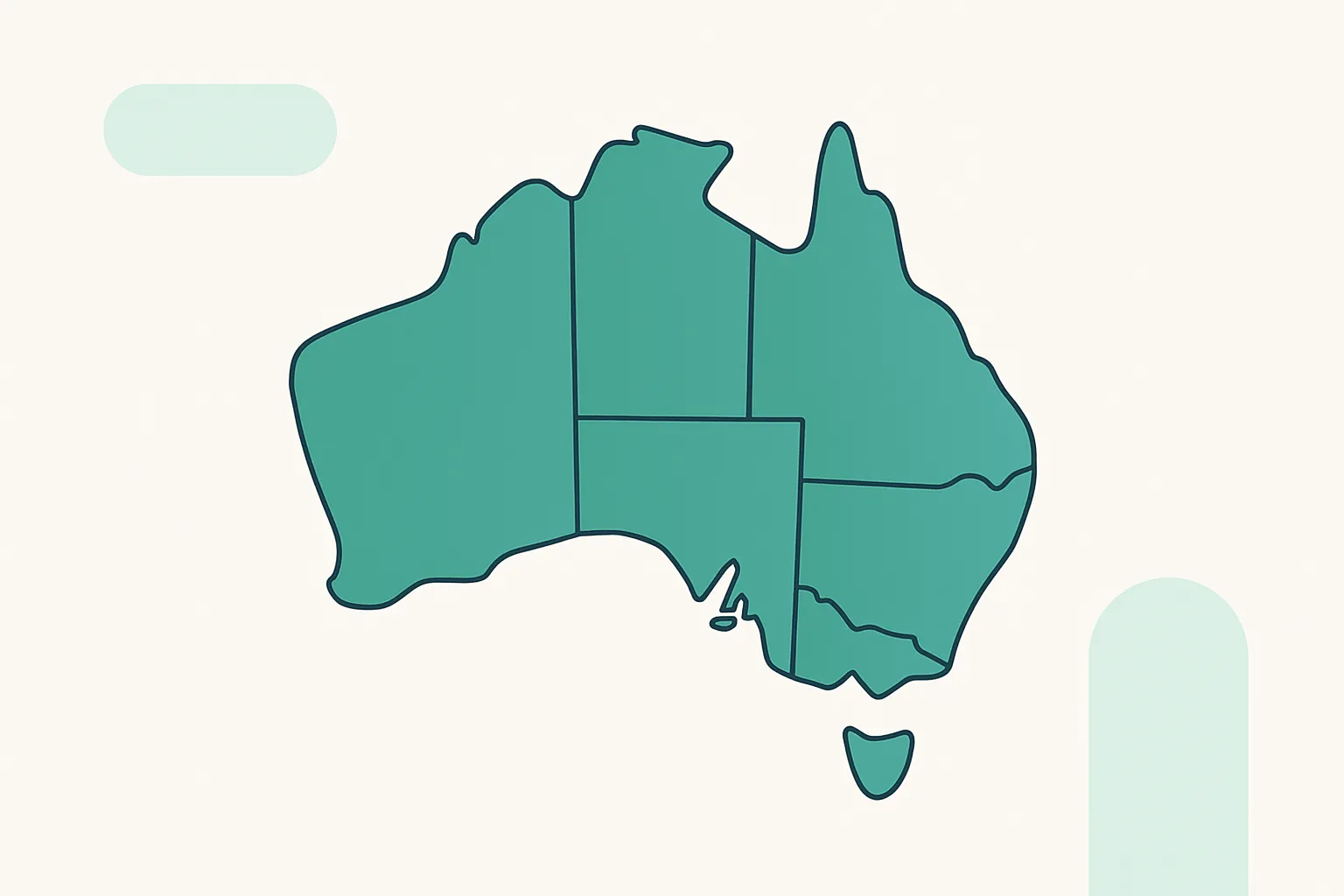
What first home buyer grants are available in Australia?
Every Australian state and territory runs its own First Home Owner Grant (FHOG) — a one-off cash payment to eligible first home buyers, funded and administered separately by each state and territory government. As at July 2026, amounts range from $50,000 in the Northern Territory down to $0 in the Australian Capital Territory, which no longer offers one at all. There is no federal equivalent grant; the amount, the property types covered and whether a grant exists at all differ materially by jurisdiction, so no single national figure applies.
A First Home Owner Grant is not the same thing as a stamp duty concession. A grant is a cash payment made to you; a stamp duty (transfer duty) concession reduces or removes the tax you’d otherwise pay on the purchase. Most states run both, with separate eligibility rules for each — qualifying for one doesn’t automatically mean you qualify for the other.
How much is the First Home Owner Grant in each state and territory?
As at July 2026:
| State/Territory | FHOG amount | Property type | Notes | Revenue office |
|---|---|---|---|---|
| NSW | $10,000 | New homes only (build, off-plan, renovated) | Cap $600,000 build; $750,000 land+build combo | revenue.nsw.gov.au |
| VIC | $10,000 | New homes only (unsold, unoccupied, unleased) | Cap $750,000 (contract price off-the-plan) | sro.vic.gov.au |
| QLD | $30,000 | New homes (boost) | Boost since 20 Nov 2023; no end date | qro.qld.gov.au |
| WA | Up to $10,000 | New, substantially renovated or owner-builder homes | Cap depends on location and contract date | wa.gov.au/rev |
| SA | Up to $15,000 | New homes only | No cap from 6 Jun 2024; 6-month residence | revenuesa.sa.gov.au |
| TAS | $20,000 | New homes | Only for transactions 1 Jul 2026–30 Jun 2027 | sro.tas.gov.au |
| ACT | $0 | — | Ceased 2019 — replaced by duty concession | revenue.act.gov.au |
| NT | $50,000 | New and established homes | Only grant covering established homes; window to 2027 | revenue.nt.gov.au |
A few of these rows need more context than a single cell can carry:
- New South Wales caps two different ways. It’s $600,000 for a new or substantially renovated home you buy or build, and a separate $750,000 combined land-plus-building-contract value if you’re buying vacant land and building. The grant doesn’t apply to established homes.
- Victoria’s $750,000 cap is a property value, and for an off-the-plan purchase specifically it’s the contract price, not the completed value. Established homes aren’t eligible.
- Queensland’s $30,000 boost applies to contracts signed on or after 20 November 2023 and has no stated end date as at July 2026; contracts before that date attracted $15,000.
- Western Australia’s cap depends on both location and when you enter the contract. For transactions from 7 May 2026, it’s $800,000 south of the 26th parallel of south latitude (which includes all of metropolitan Perth) or $1,000,000 north of it; contracts entered into on or before 6 May 2026 used a $750,000 southern cap. Established homes aren’t eligible.
- South Australia has no property value cap for contracts signed on or after 6 June 2024 — there’s no limit on the market value of the property you’re buying. Contracts signed on or before 5 June 2024 were subject to a cap; that older figure isn’t stated here. The residence requirement is a continuous period of at least 6 months, starting within 12 months after completion of the purchase or build. RevenueSA confirms the amount, property type, cap and residence conditions above.
- Tasmania’s $20,000 grant runs on a fixed window — transactions from 1 July 2026 to 30 June 2027 only — rather than being open-ended. Check the current status if you’re reading this outside that window.
- The ACT row is genuinely $0. The ACT First Home Owner Grant ceased on 1 July 2019 and has not been reinstated — it was replaced by the Home Buyer Concession Scheme, a stamp duty concession rather than a grant. That absence is itself the fact — it’s not a gap in this article’s research.
- The Northern Territory is the only jurisdiction extending its grant to established homes, not just new builds — everywhere else restricts the FHOG to new or substantially renovated properties. The $50,000 amount applies to transactions commencing between 1 October 2025 and 30 September 2027, reverting to $10,000 after that.
Confirm the exact figure and conditions for your state directly with the relevant revenue office before relying on any of the above for a purchase decision — these figures move with state budgets.
Are First Home Owner Grants different from stamp duty concessions?
Yes, and they’re worth keeping separate in your own planning. A grant is a payment to you; a stamp duty concession is a reduction in the transfer duty you owe on the purchase. Some states pair a grant with a concession on the same purchase, but each has its own eligibility criteria — price caps, property type restrictions, residency requirements and citizenship/permanent residency tests can all differ between the grant and the concession in the same state. Check both separately with your state’s revenue office rather than assuming one implies the other.
Is there a federal first home buyer grant?
No — the First Home Owner Grant is a state and territory scheme; there’s no federal cash-grant equivalent. The federal government’s support for first home buyers works differently: the Home Guarantee Scheme and Help to Buy reduce how much deposit you need rather than paying you a grant. See our guide to buying a house in Australia with a 5% deposit for how those schemes work and how they combine with a state grant.
How do I check if I’m eligible for my state’s grant?
Eligibility criteria differ by state, but most schemes test for some combination of: being a genuine first home buyer (you and any co-applicant haven’t owned residential property before), citizenship or permanent residency, an intention to live in the property for a minimum period, and — in some states — a price cap on the property. Because the exact conditions vary so much between jurisdictions, and because a grant application sits alongside your stamp duty concession application and your loan approval, this isn’t something a general article can confirm for your specific situation.
Which grant applies to me?
That depends on which state or territory you’re buying in, whether the property is new, established or vacant land, and your own residency and ownership history — factors this article can’t weigh for your specific circumstances. Your state or territory’s revenue office is the authoritative source for current eligibility and amounts, and a conveyancer or solicitor handling your purchase can confirm what applies before you rely on it.
For the deposit-side picture — how much you need on top of any grant, and how grants interact with a smaller deposit — see our guide to how much deposit you need for a first home in Australia.