What Is Home Reversion and How Is It Different from a Reverse Mortgage?
Home reversion sells a share of your home's future value at a discount; a reverse mortgage is a compounding loan. How they differ, and where MyBrix sits.

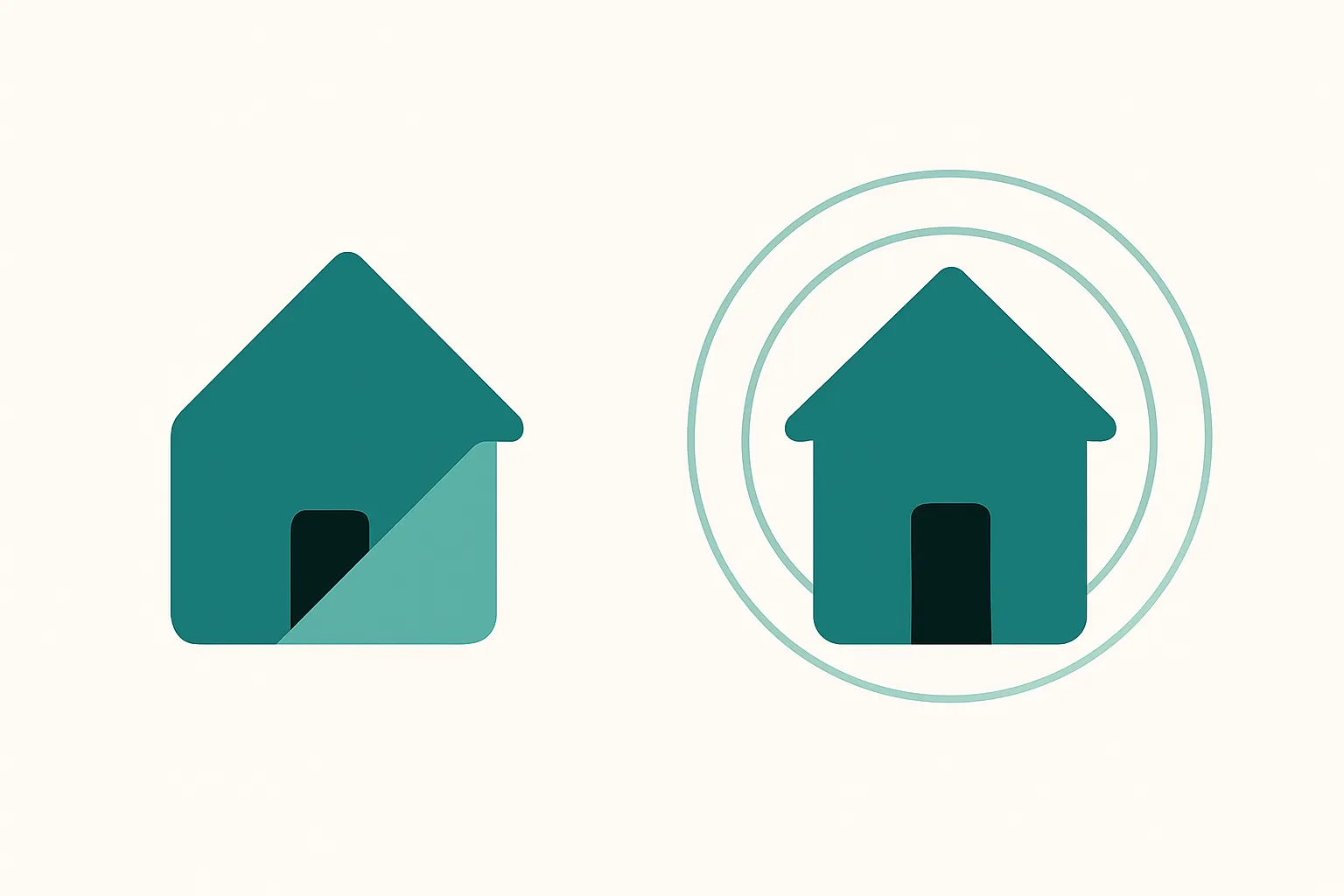
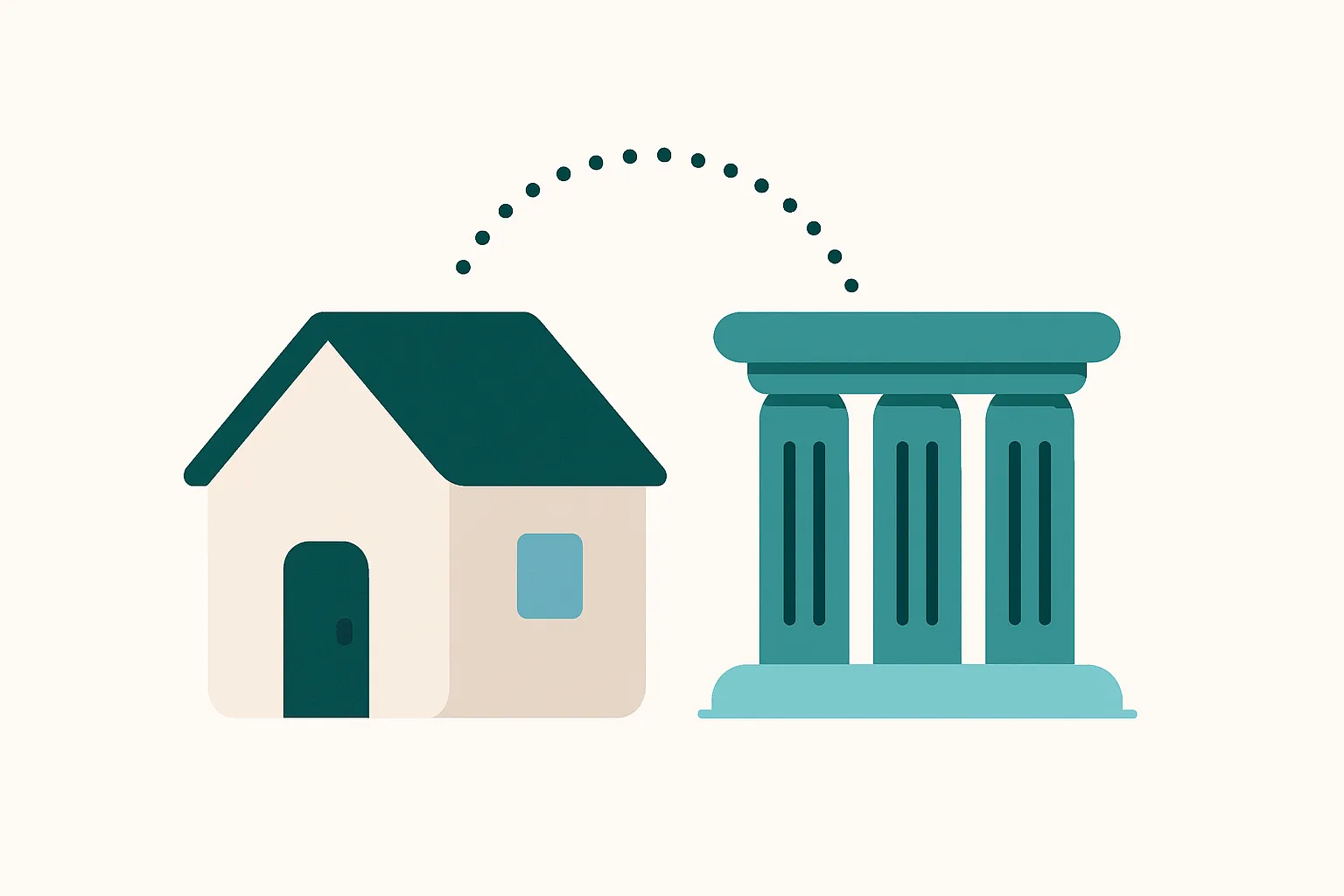
Home reversion is a sale: you exchange part of your home’s future value for a lump sum today, and there’s no interest and no debt because there’s nothing to repay. A reverse mortgage is a loan: you borrow against your home, and interest compounds on the balance until it’s repaid — usually from the sale proceeds, when the home is eventually sold. That single difference, sale versus loan, is what separates these two ways to release equity from a home, and it’s what decides everything else: what each option costs, which legal protections apply, and how much of your home’s value is left for you or your estate afterwards.
This guide defines both, puts them side by side, and looks at where MyBrix’s fractional funding model sits relative to home reversion — a related but distinct structure. It draws on Moneysmart, a federal government website run by ASIC, and MyBrix’s published terms.
What is home reversion?
Home reversion is the sale of a share of your home’s future sale proceeds to a provider, in exchange for a lump sum now. Moneysmart lists it, alongside reverse mortgages, as one of several ways to release equity from an Australian home. You keep living in the home under a reversion agreement; there’s no interest charged and nothing to repay, because you haven’t borrowed anything — you’ve sold something.
What you’ve sold is priced at a discount. In Moneysmart’s current worked example, a provider buying a 20% share of the future value of a $500,000 home might offer between $37,000 and $78,000 today, depending on your age — well short of the $100,000 a straight 20% slice of that value would otherwise represent. Moneysmart doesn’t currently publish a general discount range; the often-cited 35–60% figure comes from ASIC research published in 2005, not current market data, though it shows how steep home reversion discounts can run. The provider discounts because it may be waiting decades, until the home is eventually sold, to receive anything back.
The Australian provider market is small. As at July 2026, at least one provider — Homesafe — operates, offering home reversion agreements in metropolitan Melbourne and Sydney with its own age minimums and property criteria.
What is a reverse mortgage?
A reverse mortgage is a loan secured against your home, structured so no regular repayments are required. Instead, interest is added to the loan balance and compounds — interest charged on interest already added — until the debt is repaid, typically when the home is sold or the borrower dies. You remain the owner throughout, and any rise in the home’s value is yours; the cost is the debt compounding against it.
Because it’s a loan, a reverse mortgage sits inside Australia’s consumer credit rules — the National Consumer Credit Protection Act 2009. Reforms from 2012 added responsible-lending obligations and required lenders to show borrowers projections of what could happen to their home equity over time, before they sign. Home reversion has no equivalent pre-sale projection requirement, because it isn’t a credit product in the first place.
The strongest safeguard is negative equity protection. For reverse mortgages taken out from 18 September 2012, the law ensures, in Moneysmart’s words, “you can’t end up owing the lender more than your home is worth.” Contracts signed earlier may lack it. Each lender sets its own rate, fees and minimum age — none of that is fixed by law, and the government runs a separate loan scheme, the Home Equity Access Scheme, on similar loan-and-compounding terms; see our guide to how HEAS works for that scheme’s specifics.
How is home reversion different from a reverse mortgage?
Assumptions behind this table: an owner-occupied residential property; a reverse mortgage as described by Moneysmart, taken out after 18 September 2012 so negative equity protection applies; home reversion as described by Moneysmart and at least one Australian provider (Homesafe), terms as at July 2026. Individual lender and provider terms vary — this compares structure, not price.
| Home reversion | Reverse mortgage | |
|---|---|---|
| What it is | Sale of a future-value share | Loan secured against your home |
| Cost fixed upfront? | Yes — set at settlement | No — compounds over time |
| Interest | None — there is no debt | Yes, compounding until repaid |
| Regular repayments | None | None required |
| Ownership and occupancy | You remain and keep living there | You remain and keep living there |
| Statutory protection | None — not a credit product | Negative equity protection (post-2012 loans) |
| Regulated as | Property transaction; ASIC conduct jurisdiction | Credit product, NCCP Act 2009 |
| Exit event | Provider paid from eventual sale proceeds | Loan repaid, usually from sale proceeds |
Two rows are worth unpacking. Cost mechanism: a reversion agreement prices its entire cost once, at the point of sale — the discount is the cost, and nothing further accrues against that share regardless of how long the arrangement runs. A reverse mortgage’s cost isn’t fixed at all; it grows every day the loan is outstanding, following a compounding-interest curve rather than a one-off discount. Neither shape is automatically cheaper — it depends how long the arrangement runs and what the property does in the meantime.
Regulation: reverse mortgages sit squarely inside consumer credit law, with the responsible-lending and negative equity protections that come with it. Home reversion sits outside that framework entirely — it’s a property transaction, not a loan — though ASIC retains a conduct-related jurisdiction over providers under the ASIC Act. That means a reversion buyer doesn’t get the reverse-mortgage borrower’s statutory backstop; the protection instead comes from reading the provider’s contract carefully before signing.
Where does MyBrix’s model sit relative to home reversion?
MyBrix’s fractional funding model belongs to the same broad family as home reversion — a sale of future value, not a loan, so no interest and no debt either way. But the mechanics differ in several respects the published terms make clear.
The clearest difference is how the sold share is defined. A home reversion share is priced at a discount off future value, for the reasons above. MyBrix instead divides a property into 10,000 Brix, each defined in the Product Disclosure Statement as a fractional economic interest; together, the 10,000 Brix represent 100% of the property’s economic benefit, and MyBrix’s cost sits in separate fees rather than in the unit price itself (below). A Brix is a financial product under Chapter 7 of the Corporations Act 2001 (Cth), not a loan and not a slice of your title.
The cost structure differs too. Rather than one upfront discount, MyBrix charges defined fees, as at July 2026: a funding fee of either 5.0% of the funded amount upfront or 0.1% per month deferred, plus an occupation fee of 0.2%–0.5% per month of the funded amount while the arrangement runs. A handful of smaller one-off fees (property assessment, valuation, application) apply alongside these. Home reversion has no equivalent ongoing fee — its cost sits entirely in the initial discount.
A few other differences worth noting, as at July 2026:
- Retained holding. MyBrix requires you to keep at least 20% of your Brix (2,000 of 10,000) once funding completes; lower holdings such as 10% may be approved case by case. Home reversion has no equivalent minimum-retention rule — the share sold is whatever’s agreed with the provider.
- Term. MyBrix’s arrangement runs to a maximum of 10 years, at which point you buy back the remaining Brix at a pre-agreed price or the property is sold and proceeds are distributed proportionally to all Brix holders. Home reversion agreements, per Moneysmart’s general description, typically run open-ended, until the home is eventually sold.
- Security. A first-ranking mortgage is intended to be registered over the property at settlement, held on trust for all Brix holders — a layer of security that sits alongside, not instead of, the Corporations Act disclosure regime (the PDS and Target Market Determination available at mybrix.com.au).
- Occupancy. You remain the registered legal owner and selling Brix doesn’t affect your occupancy rights; you keep the owner’s responsibilities — rates, insurance, maintenance.
Investors see this same structure from the other side; our guide to selling a share of your home sets out how a fractional sale compares with a reverse mortgage more broadly.
Which factors matter when choosing between them?
How long you expect the arrangement to run. The longer a reverse mortgage runs, the larger the compounding debt gets. Home reversion’s cost is already fixed at settlement, so time doesn’t add to it directly — though it does affect what the retained share of your home ends up being worth. Different horizons suit different structures; that’s a calculation, not a rule of thumb.
Age and eligibility. Reverse mortgage lenders set their own minimum ages — nothing is fixed by law. Home reversion has provider minimums too: as at July 2026, Homesafe’s published thresholds are 60 or older in Victoria, and 55 or older in New South Wales provided one owner is at least 60.
Which protections apply. A post-2012 reverse mortgage carries statutory negative equity protection. Home reversion relies on the provider’s contract and ASIC’s general conduct oversight — there’s no equivalent statutory guarantee, so reading the agreement closely matters more, not less.
Your Age Pension. Converting value held in your home into money or other assets can change how your entitlements are assessed, whichever option you use. Payments can be affected in ways specific to your situation — contact Services Australia’s free Financial Information Service before proceeding.
Where can you get reliable information?
Moneysmart covers both reverse mortgages and home reversion in detail, and provider or platform disclosure documents carry the product-specific terms — for MyBrix, the Product Disclosure Statement and Target Market Determination at mybrix.com.au. Our guides to accessing home equity without a loan and reverse mortgage vs selling a share of your home map the wider set of options and a fuller side-by-side comparison. General information can set out how each structure works; weighing them against your own home, age and plans is a job for a licensed financial adviser.