How do existing debts affect your home loan borrowing capacity?
Credit cards, BNPL, car and personal loans are all weighed in a serviceability assessment — the mechanism explained, without inventing a figure.

How do existing debts affect your home loan borrowing capacity?
Lenders look at more than your income when working out how much you can borrow — they weigh your existing debts and commitments too, from credit cards to Buy Now Pay Later to car and personal loans. Exactly how much any one of those debts reduces your borrowing capacity isn’t something this article, or any general guide, can state as a fixed figure — that’s a matter of individual lender policy, and it isn’t published as a formula. What is stable is the mechanism: each commitment is one input into a broader serviceability assessment, and the same interest-rate buffer applies whether the debt in question is a mortgage, a car loan or a credit card limit.
Our guide to how banks calculate borrowing capacity sets out that full framework under ASIC’s Regulatory Guide 209 — income, expenses, existing debts and the buffer together. This article focuses on how the main types of existing debt fit into it.
How do credit card limits factor into borrowing capacity?
A credit card is unusual among consumer debts because a lender may be assessing more than what you currently owe on it. Whether a specific lender treats the card’s full approved limit or only its drawn balance as the relevant figure is set by that lender’s own policy and varies between institutions — some weigh the limit itself, on the reasoning that you could draw on it in full at any time, even on a card you pay off every month. Confirm which approach applies with your own lender or a broker rather than assuming either treatment.
This matters most if you’re carrying several cards, or a card with a limit well above what you actually use. Reducing a limit, rather than closing the card outright, is one option some borrowers consider — but as with any decision about existing credit, whether that helps depends on the lender and your own circumstances, not a general rule.
How does Buy Now Pay Later (BNPL) affect my borrowing capacity?
Buy Now Pay Later services — Afterpay and Zip are two examples of the category — let a purchase be split into instalments, typically without traditional interest charges. That structure doesn’t put BNPL outside a serviceability assessment: an active BNPL arrangement is an outstanding repayment commitment, and a lender asking about your financial commitments is likely to ask about it in much the same way as any other short-term credit.
BNPL is comparatively new as a mainstream product, and how individual lenders weigh it — as a running commitment, as evidence of spending patterns, or in some other way — is lender policy that isn’t published in a consistent, comparable form across providers. This article won’t single out a BNPL provider as inherently risky: BNPL is a product category, not a red flag, and the same general principle (an active commitment is weighed in the assessment) applies to it as to any other credit product.
How do car loans and personal loans affect my borrowing capacity?
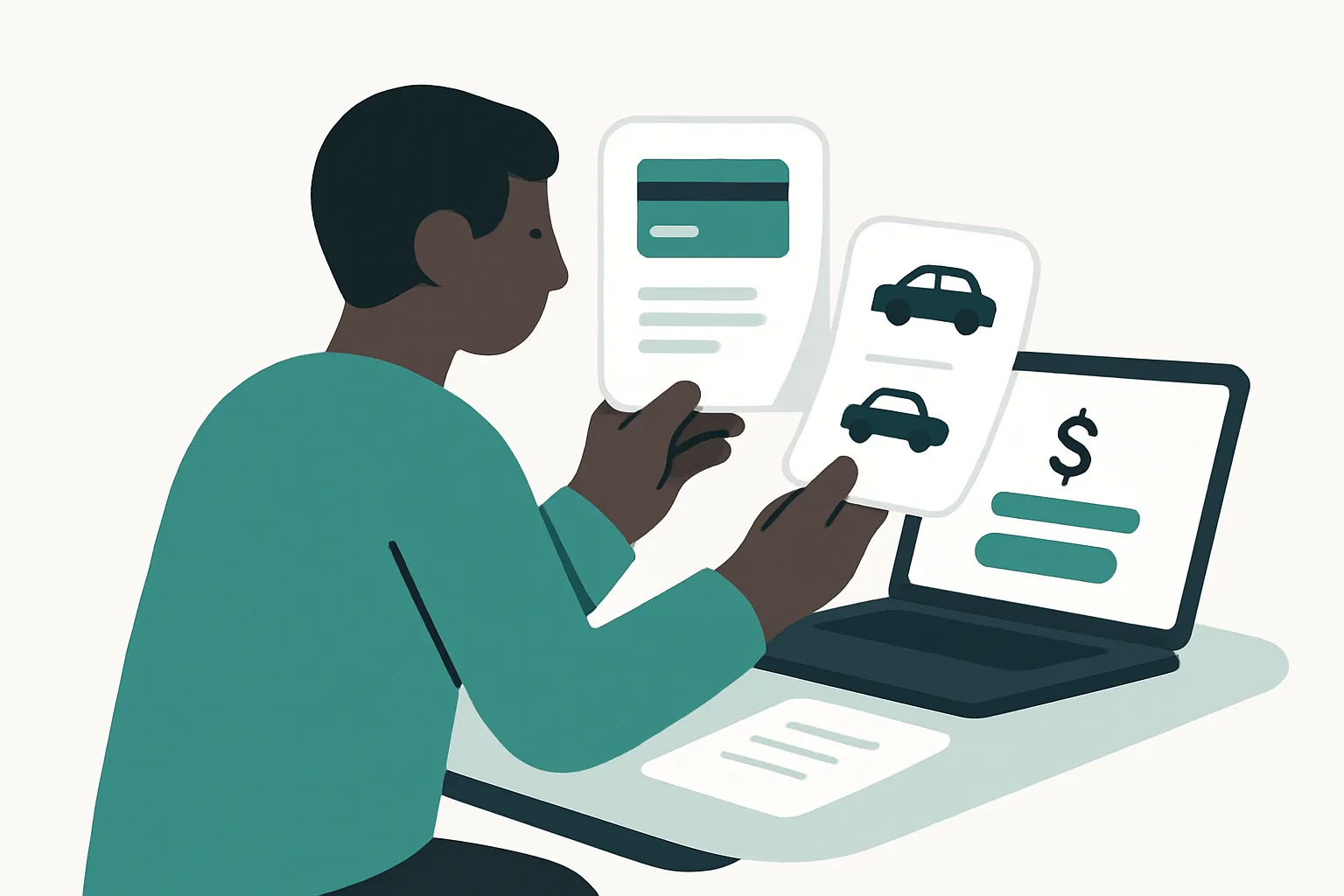
A car loan or personal loan has a fixed regular repayment — principal and interest — for a set term. That repayment is a straightforward existing commitment in a serviceability assessment: it reduces the income a lender treats as available to service a new home loan, in much the same way any other fixed loan repayment does.
As at July 2026, APRA’s prudential guidance directs lenders to apply an interest-rate buffer of at least 3.0 percentage points (under APS 220, relayed through APG 223) to new AND existing debt commitments — so an existing car or personal loan repayment is factored in on a stress-tested basis, not just at its current repayment amount. Exactly how a specific lender applies that to your situation is, again, that lender’s own policy.
So how much do these debts actually reduce my borrowing capacity?
This is the question most people actually want answered, and it’s also the one this article can’t answer with a number. There’s no published ratio or rule of thumb that reliably converts a credit card limit, a BNPL commitment or a loan repayment into a dollar reduction in borrowing capacity — the weighting is set by each lender’s own serviceability policy, and those policies vary between institutions. Anyone quoting a specific reduction figure is describing one lender’s approach at one point in time, not a market-wide rule.
Comparing the main types
| Debt type | What a lender is likely to look at | Interest / cost structure |
|---|---|---|
| Credit card | Approved limit and/or balance — varies by lender | Interest on balances past the interest-free period |
| Buy Now Pay Later | Active instalment commitments outstanding | Typically no interest; missed-payment fees may apply |
| Car loan / personal loan | Fixed regular repayment for the loan term | Interest charged on the outstanding balance |
| HECS-HELP (for comparison) | Compulsory repayment, once income is above a threshold | Indexation, not interest — see our separate guide |
Should I pay any of these off before applying?
That’s the question covered in our guide to whether to clear debts before applying for a home loan — the short version is that it’s a genuine trade-off between the cash you’d use and the commitment you’d remove, not a step everyone should take. A mortgage broker who works across multiple lenders is best placed to show you how a specific lender would treat your actual debts, and what difference clearing any of them would realistically make to your situation.
If you’re earlier in the process and still working out your deposit, our guide to how much deposit you need for a first home in Australia covers that separately from the borrowing-capacity side covered here.