How does the Help to Buy shared equity scheme work?
How the Help to Buy shared equity scheme works: the 2% deposit, the Commonwealth's equity share, income and price caps, as at July 2026.


How does the Help to Buy shared equity scheme work?
Help to Buy is a federal shared equity scheme: the Commonwealth Government contributes part of the purchase price of your home in exchange for a proportional equity share in it, so you need a smaller deposit and borrow less than you otherwise would. As at July 2026, the Commonwealth contributes up to 40% of the purchase price for a newly built home and up to 30% for an existing home — “up to,” not a flat rate, since the actual share you’re offered depends on how much of the price you and your loan cover. The minimum deposit is 2% of the purchase price, and there’s no lenders mortgage insurance (LMI) on the loan portion.
The scheme is legislated under the Help to Buy Act 2024 (Cth), No. 124 of 2024, administered by Housing Australia. Applications opened on 5 December 2025, and the scheme reached national coverage when it expanded to Tasmania in June 2026 — it’s now available in every state and territory.
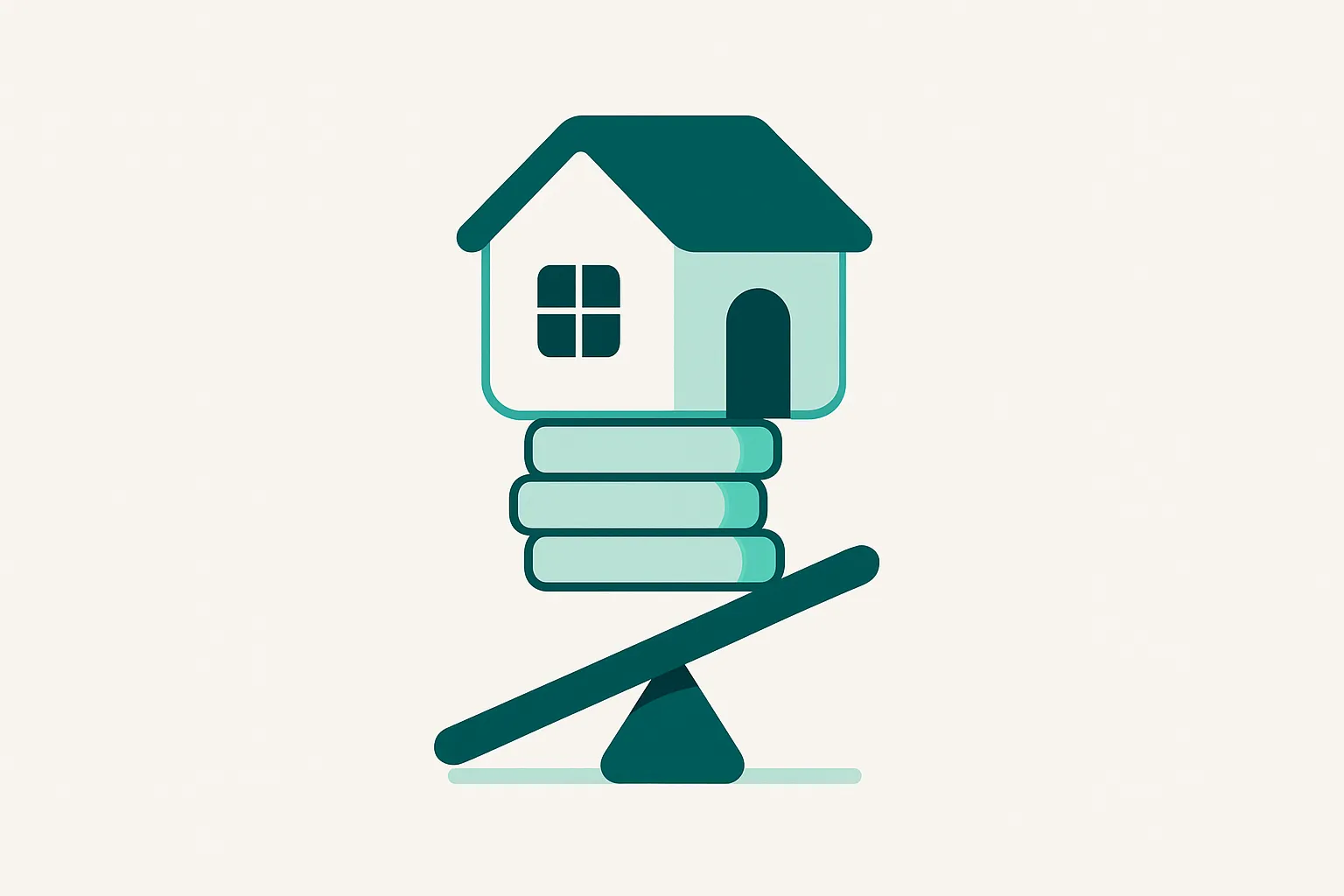
The trade-off is the one this article comes back to throughout: taking a Commonwealth equity share means you don’t own 100% of your home, and the government’s share moves with the property’s value — both up and down. That’s not a detail buried in the fine print; it’s the mechanism itself, and it’s worth understanding before the eligibility checklist below.
What “shared equity” actually means here
In a shared equity arrangement, you — the buyer — hold legal title to the home, but a second party holds a proportional financial stake in its value. Under Help to Buy, you remain the owner on title; Housing Australia takes a second mortgage over the property as security for its share; and the Commonwealth’s share of the property’s value rises or falls in step with the property’s value, proportionally, for as long as it holds that share. This is different to a loan: there’s no interest charged on the Commonwealth’s contribution, but you also don’t own that portion of the home outright while it’s in place.
The Commonwealth’s share is worked out — and repaid — in one of three ways: when you sell the property, through voluntary incremental repayments you make over time, or by buying the equity out using additional lending. In every case, the share is valued at the property’s value at the time of payment, not at the price you originally paid. If the property has grown in value, buying the government out costs more in dollar terms than the original contribution; if it’s fallen, it costs less — the sharing runs in both directions.
Who is eligible for Help to Buy?
Eligibility is narrower on citizenship than most other first home buyer schemes, and this is the detail readers most often get wrong by assuming the rules match the 5% Deposit Scheme (Home Guarantee Scheme). They don’t.
- At least 18 years old.
- All applicants must be Australian citizens. Permanent residents are not eligible — this is a real difference from the Home Guarantee Scheme, which accepts citizens or permanent residents.
- A single applicant, or two joint applicants.
- Owner-occupier only — you can’t rent the property out.
- You (and any joint applicant) cannot own or beneficially own any property in Australia or overseas, with limited exceptions (for example, a single parent buying out a co-owner or selling an existing interest).
- You can’t receive other Commonwealth, state or territory shared-equity, loan or guarantee support for the same purchase — though stamp duty concessions, grants and exemptions from other schemes are still allowed alongside Help to Buy.
- Open to both genuine first home buyers and previous home owners — unlike a First Home Owner Grant, Help to Buy isn’t restricted to people who’ve never owned property.
- Eligible property types: a new or existing house, townhouse, apartment, unit or duplex; vacant land with an eligible building contract; or a demolish-and-rebuild.
Income caps — as at July 2026
Unlike the Home Guarantee Scheme, which has no income caps at all, Help to Buy applies income caps that are indexed to wages each 1 July, based on your taxable income on your ATO Notice of Assessment for the previous financial year. For FY2026-27 (1 July 2026 – 30 June 2027):
| Applicant type | Income cap (FY2026-27) |
|---|---|
| Single applicant | $103,000 |
| Single parent applicant | $165,000 |
| Joint applicants | $165,000 |
The prior year’s caps (FY2025-26) were lower — $100,000 / $160,000 / $160,000 — so if you’ve seen an older figure quoted, it’s now out of date.
Price caps by state — as at July 2026
Property price caps aren’t indexed; the government sets them by policy decision. Every figure below is from Help to Buy’s own cap table.
| Jurisdiction | Capital city / regional centre | Rest of state |
|---|---|---|
| NSW | $1,300,000 | $800,000 |
| VIC | $950,000 | $650,000 |
| QLD | $1,000,000 | $700,000 |
| WA | $850,000 | $600,000 |
| SA | $900,000 | $500,000 |
| TAS | $700,000 | $550,000 |
| ACT | $1,000,000 | — (no rest-of-state split) |
| NT | $600,000 | $600,000 |
Jervis Bay Territory and Norfolk Island sit at $550,000; Christmas Island and the Cocos (Keeling) Islands at $400,000. NSW regional centres recognised for the higher cap include Newcastle and Lake Macquarie, Illawarra, Central Coast, Mid-North Coast, Coffs Harbour–Grafton and Richmond–Tweed; VIC’s is Geelong; QLD’s are the Gold Coast and Sunshine Coast.
Do not confuse this table with the Home Guarantee Scheme’s price caps. They are set separately and aren’t the same number. NSW is the clearest example: the Help to Buy cap is $1,300,000, while the Home Guarantee Scheme (5% Deposit Scheme) cap for the same capital city/regional band is $1,500,000. Always check which scheme a cap belongs to before relying on it.
Places and cost
Help to Buy is capped at 10,000 places each financial year — a hard limit, unlike the Home Guarantee Scheme’s unlimited places. As at a 1 July 2026 government update, more than 7,200 applications had been made since launch, with around 4,800 buyers having found a home or already settled; demand has run strongest in Victoria, then NSW, then Queensland. About 7 in 10 applications have come from single applicants (12% single parents), the median deposit paid has been around $30,000, and 86% of successful applicants have been first home buyers.
If you’re improving the home or varying a new-build contract, Commonwealth Share Percentage adjustment thresholds also apply for FY2026-27: a minimum $21,000 spend on home improvements, and a minimum $21,000 cost increase on a new-build contract, before your equity split is reassessed (both were $20,000 in FY2025-26).
What do you give up in exchange for the smaller deposit?
This is the part of Help to Buy that deserves plain language, not a sales pitch either way.
What you gain: a much smaller deposit (2% instead of the 10–20% many lenders expect), no LMI, and a smaller amount to borrow — which can bring home ownership forward for buyers who’d otherwise need years longer to save.
What you give up: a share of your home’s future value. Because the Commonwealth’s stake moves proportionally with the property’s value, a larger share of any capital growth belongs to the government for as long as it holds its share — the same proportion you’d have kept if you’d bought outright. The scheme cuts both ways on risk, too: if the property loses value, the Commonwealth’s share falls with it, so you’re not carrying that loss alone on the government’s portion. Buying the Commonwealth’s share out — in full or in instalments — costs more in dollar terms if the property has risen since settlement, and less if it’s fallen, because the buy-out is always priced at current value.
There are ongoing obligations while the Commonwealth holds a share: you need to maintain the home, keep it insured, and take part in periodic reviews providing an insurance certificate and your updated taxable income. Applications go through a Participating Lender only — never directly to Housing Australia — and a conditional approval reserves your place for up to 90 days, extendable by a further 90 days at Housing Australia’s discretion.
Help to Buy is a different mechanism to buying a fractional economic interest (“Brix”) in a property through MyBrix — Help to Buy shares equity in the home you live in with the Commonwealth; a Brix is a separate financial product an investor holds, and doesn’t touch your home loan or your title at all.
Because Help to Buy places a second mortgage over your home and shares in both gains and losses, Housing Australia’s own guidance is direct about getting help before you sign up: as the scheme’s materials put it, “we strongly recommend you consider seeking independent legal and financial advice.”
Is Help to Buy worth it for you?
That isn’t a question this article can answer for you. Whether trading part of your future equity for a smaller deposit and lower repayments makes sense depends on your income, how long you plan to stay in the home, your view on the property’s likely trajectory, and what else you’d otherwise do with the deposit you’d need to save. A mortgage broker can model the repayment side; a licensed financial adviser can model the equity trade-off against your broader position. Both are the right next step before applying, not this article.
For the deposit-size question more generally — including how Help to Buy compares with other low-deposit paths — see our guide to how much deposit you need for a first home in Australia and our guide to buying with a 5% deposit.