Is the First Home Super Saver Scheme Worth It for First Home Buyers?
There's no single yes or no on FHSS — the factors that decide it for you, and why a registered tax agent is the right person to weigh them.

Is the First Home Super Saver scheme worth it for first home buyers?
There’s no single yes or no here. Whether the First Home Super Saver (FHSS) scheme is worth using depends on a short list of factors: your tax position, how comfortable you are with savings sitting inside superannuation until they’re released, and whether using the scheme affects anything else you’re doing with your super. This article lays out those factors rather than picking a side for you — a registered tax agent or licensed financial adviser is the right person to weigh them against your actual numbers.
FHSS lets you make voluntary contributions into your superannuation and later apply to have them released — together with associated earnings — to help fund a deposit on your first home. For how the scheme’s mechanics actually work, including how to apply for a determination and a release, see our guide to how the First Home Super Saver scheme works. This article assumes you already understand the basics and focuses only on the factors that make it a good or poor fit.
What actually determines whether FHSS suits you?
Four things drive the answer, and none of them resolves the same way for everyone.
The tax treatment depends on your own numbers
Contributions made through FHSS can be concessional (for example, salary-sacrificed or personal contributions you claim a deduction for) or non-concessional (made from money you’ve already paid income tax on). Concessional contributions are taxed inside super at a flat 15%, which is usually lower than your marginal income tax rate on take-home pay. When you later release FHSS amounts, the assessable portion is taxed at your marginal tax rate (including the Medicare levy) less a 30% FHSS tax offset — or withheld at a flat 17% if the ATO can’t estimate your marginal rate from your records. Whether that combination leaves you better off than simply saving the same money outside super still depends on your own numbers — it isn’t a fixed amount, and this article can’t state one. That’s exactly the calculation a registered tax agent can run against your income and contribution history.
The scheme also credits associated earnings on top of your released contributions, calculated using the ATO’s shortfall interest charge rate — a notional rate, not your fund’s actual investment return. That rate resets every quarter; as at July 2026 it’s 7.43% a year. Tax outcomes depend on your circumstances — speak with a registered tax agent before acting.
Your money moves into super’s rules, not your own
Once a contribution goes into super — even one earmarked for FHSS — it isn’t sitting in an everyday account you can draw on whenever you like. It follows superannuation preservation rules until you’ve met the scheme’s own conditions and the ATO has approved a determination and release. For some buyers, that structure is a helpful forced-saving mechanism. For others, having a deposit sit somewhere less accessible than a savings account is itself a cost, independent of any tax question.
Contribution caps interact with your other super contributions
FHSS counts a maximum of $15,000 of eligible contributions from any one financial year, and $50,000 in total. The amount released is 100% of your eligible non-concessional contributions, 85% of your eligible concessional contributions, plus the associated earnings above, released on a first-in-first-out basis against your contribution history. Because these are the same super contributions the ATO tracks against your broader annual contribution caps, using contribution room for FHSS is not a separate, isolated decision — it can affect how much headroom you have left for other super contributions in the same year, including any you or an employer are already making for retirement purposes. Superannuation rules are complex and the consequences of getting a contribution or release wrong can be significant — seek advice from a licensed financial adviser or registered tax agent before acting.
There’s a deadline once funds are released
Requesting a release isn’t the end of the process — for determinations made on or after 15 September 2024 (the rule that applies to current requests), you have 12 months from the date you request your release to sign a contract to buy or build a home, or to recontribute the released amount to your super. The ATO will generally allow a further 12 months — to a 24-month maximum — without you needing to apply for the extension. That timing constraint sits on top of whatever else is happening in your house search, and it’s worth understanding before you request a release rather than after.
Weighing the trade-offs
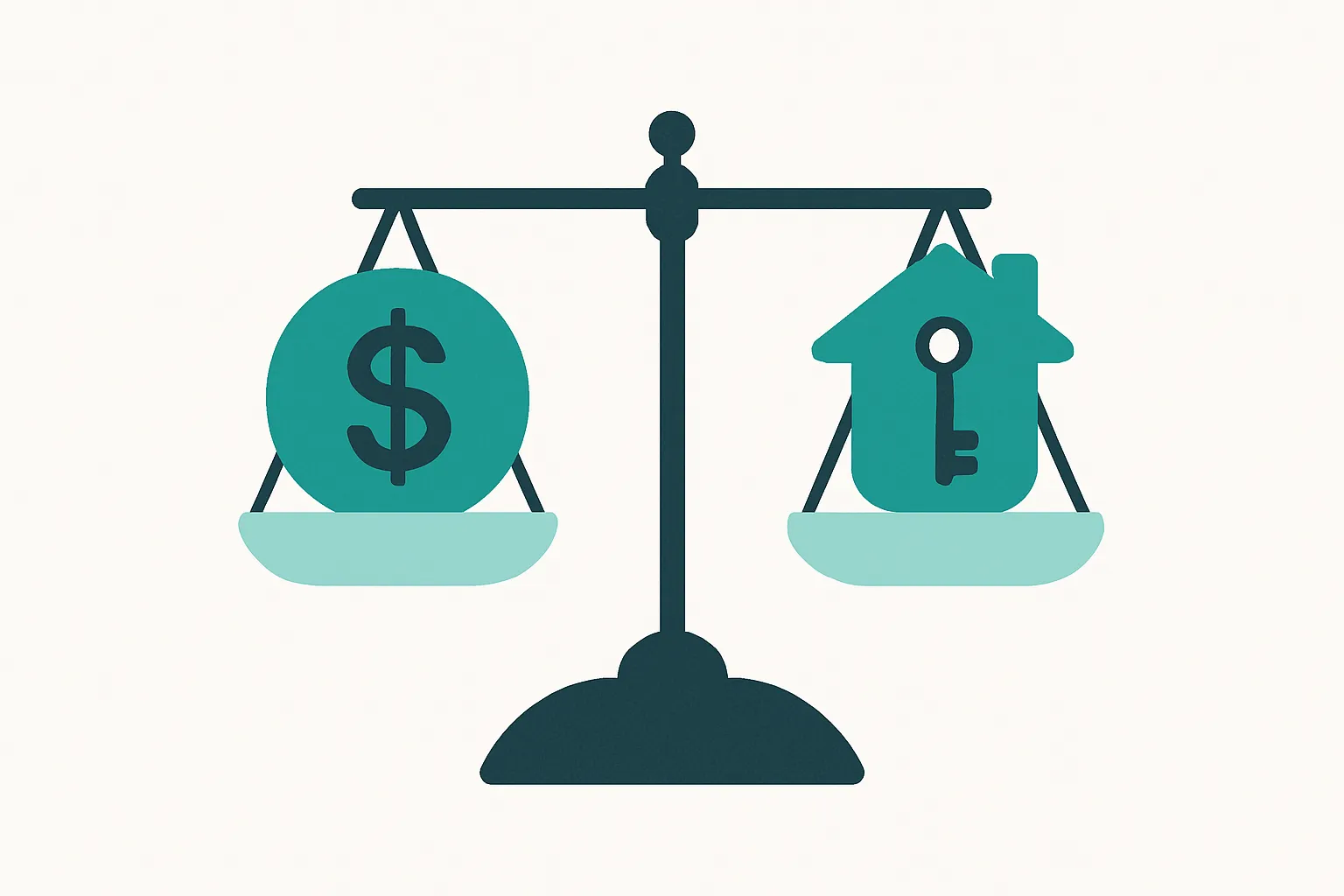
None of the factors above is automatically decisive — which one matters most is personal. The table below lays out what each factor involves, not which way it should be weighed.
| Factor | What it involves | What it means for you |
|---|---|---|
| Tax treatment | Taxed differently inside super vs. take-home pay | Depends on your marginal rate |
| Access | Locked to super rules until ATO release | Not available on demand |
| Contribution caps | $15,000/FY, $50,000 total, shared with other caps | May reduce other super contributions |
| Timing after release | A deadline applies after release | Adds a fixed clock to your search |
The genuine trade-off underneath all four rows is this: some buyers would rather keep their deposit savings fully liquid and outside super, even if there’s a tax benefit on the table, simply because they value having the money accessible on their own timeline. Others are comfortable with the administration and the preservation rules in exchange for whatever the tax treatment turns out to mean for their situation. Neither preference is more correct than the other — they’re different risk tolerances applied to the same set of facts.
How do you decide if FHSS is right for you?
This isn’t a question this article can answer for you. Which of the factors above matters most depends on your timeline for buying, your income, and how the caps interact with any other super contributions you’re already making — and that’s genuinely a case-by-case calculation, not a rule of thumb. It also sits alongside the separate question of how much deposit you’re aiming for in total; our guide to how much deposit you need to buy a first home covers that ground on its own. A registered tax agent or licensed financial adviser can model the FHSS pathway against your actual income and contribution history, and tell you what it would mean in your case — something a general article, by design, cannot do.