What Is a Basic Home Loan vs. a Packaged Home Loan in Australia?
Basic vs packaged home loans compared — the bundled features, the annual fee structure, and how to weigh whether the bundle pays for itself.

What is a basic home loan vs. a packaged home loan in Australia?
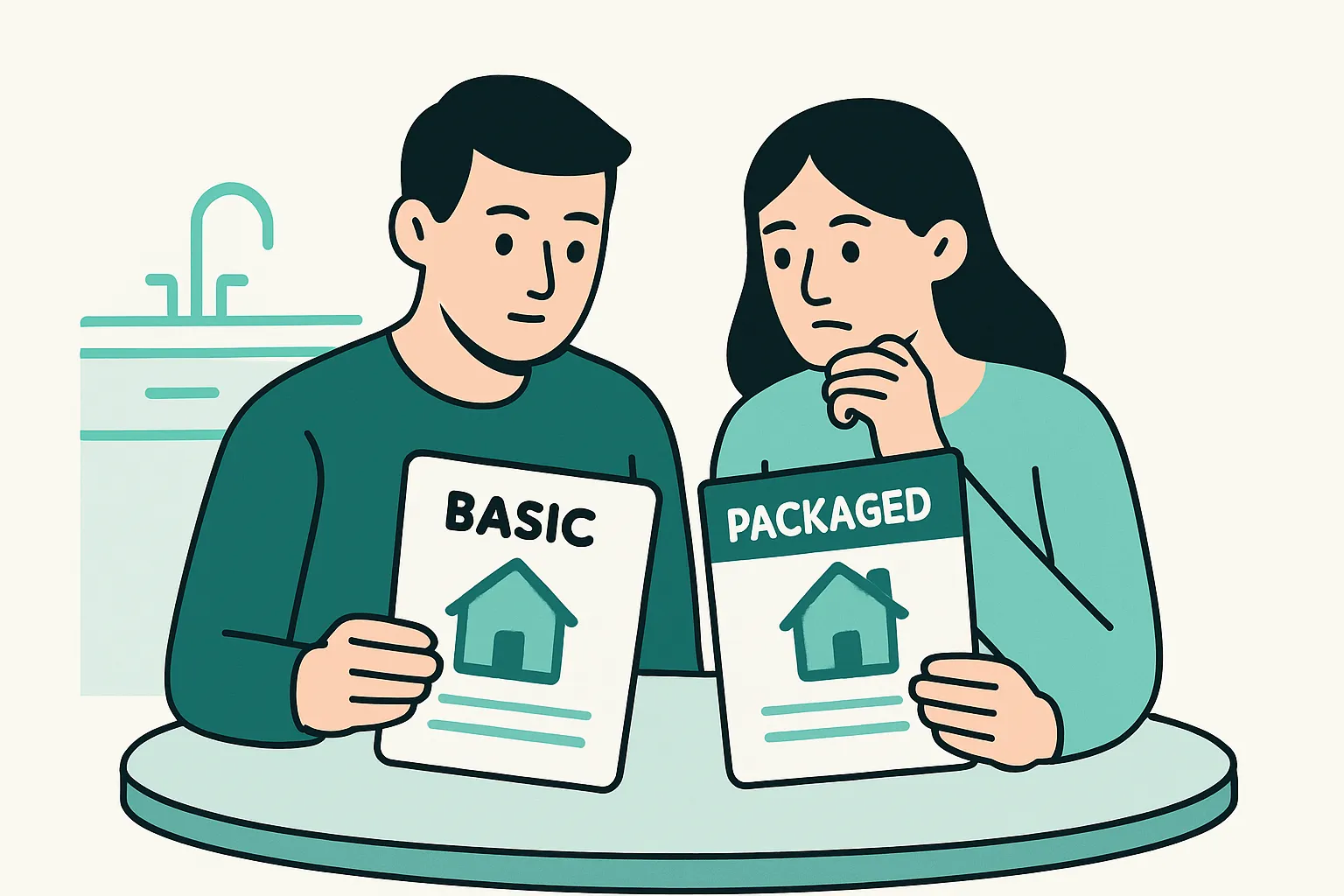
A basic home loan is a stripped-back product: fewer built-in features, and often no ongoing annual fee, or a low one. A packaged home loan bundles a set of features — commonly an offset account, a fee-free or discounted credit card, and fee waivers or discounts on the lender’s other products — usually for a flat annual package fee charged regardless of how much of the bundle you actually use.
Neither structure is better in the abstract. Which one costs you less depends entirely on whether you’d use enough of the packaged features to outweigh the annual fee.
What is an offset account, and why does it matter here?
An offset account is a transaction account linked to your home loan, where the balance sitting in it is deducted from your loan balance before interest is calculated — so money sitting in the offset account effectively reduces the interest you’re charged without you needing to make an extra repayment. It’s one of the most commonly bundled features in a packaged loan, and one of the main reasons people consider paying a package fee at all.
What features typically come with a packaged loan?
Packages vary by lender, but the bundle commonly includes some combination of:
- One or more offset accounts linked to the loan
- A credit card with the annual fee waived or reduced
- Discounts or fee waivers on other products from the same lender — insurance, additional loans, or a second property purchase
- Sometimes a small discount on the interest rate margin itself, on top of the other features
A basic loan typically has none of these, or a much narrower version of them — for example, a single offset account with no other inclusions, or no offset facility at all.
What does a packaged loan typically cost?
There’s no single “typical” package fee across the market — each lender sets its own annual package fee and reviews it independently, so the only reliable figure is the current, published fee schedule for the specific loan you’re considering.
| Basic home loan | Packaged home loan | |
|---|---|---|
| Ongoing fee | None, or low | Annual package fee |
| Offset account | Rarely included | Usually included |
| Bundled credit card | Not included | Often fee-free or discounted |
| Other product discounts | Not included | Commonly included |
| Fee charged regardless of use | No | Yes |
The fee on a packaged loan is charged whether or not you use every feature in the bundle, which is the central trade-off to weigh.
How do I know if a package fee is worth paying?
This isn’t a question with one right answer — it depends on your own circumstances rather than a rule that applies to everyone. A package fee is more likely to pay for itself if you’d genuinely use the offset account with a meaningful balance, if the credit card fee waiver alone is close to or more than the package fee, or if you hold other products with the same lender that the package discounts. It’s less likely to be worthwhile if you’d only use one feature lightly, or if a basic loan’s lower rate or lower fees already beats the packaged option once the annual fee is accounted for.
Can I switch between a basic and a packaged loan later?
Many lenders allow you to move between their basic and packaged products, though the process, any exit costs, and whether you keep your existing interest rate vary by lender and by loan. It’s worth asking your lender directly, or having a broker check, before assuming a switch is free or automatic.
As at July 2026, package fees and the exact mix of bundled features are set individually by each lender and can change without notice — always check the current, published fee schedule for the specific loan you’re considering rather than relying on what a lender charged previously.
Working out whether a basic or packaged loan suits you better comes down to your own borrowing size, how many of the bundled features you’d genuinely use, and how those numbers compare once the annual fee is factored in. A licensed mortgage broker can run that comparison against your actual loan size and habits, rather than a generic rule of thumb.
If you’re still earlier in the process and working out your deposit, our guide to how much deposit you need for a first home in Australia covers the paths available to first home buyers.
General information only — see the disclaimer below. This article does not constitute financial or credit advice.