How Do I Find the Most Competitive Interest Rate Without Hurting My Credit?
Comparing rates or getting a broker's assessment is a different step to a formal loan application. What the distinction means for your credit file.

How do I find the most competitive interest rate without hurting my credit?
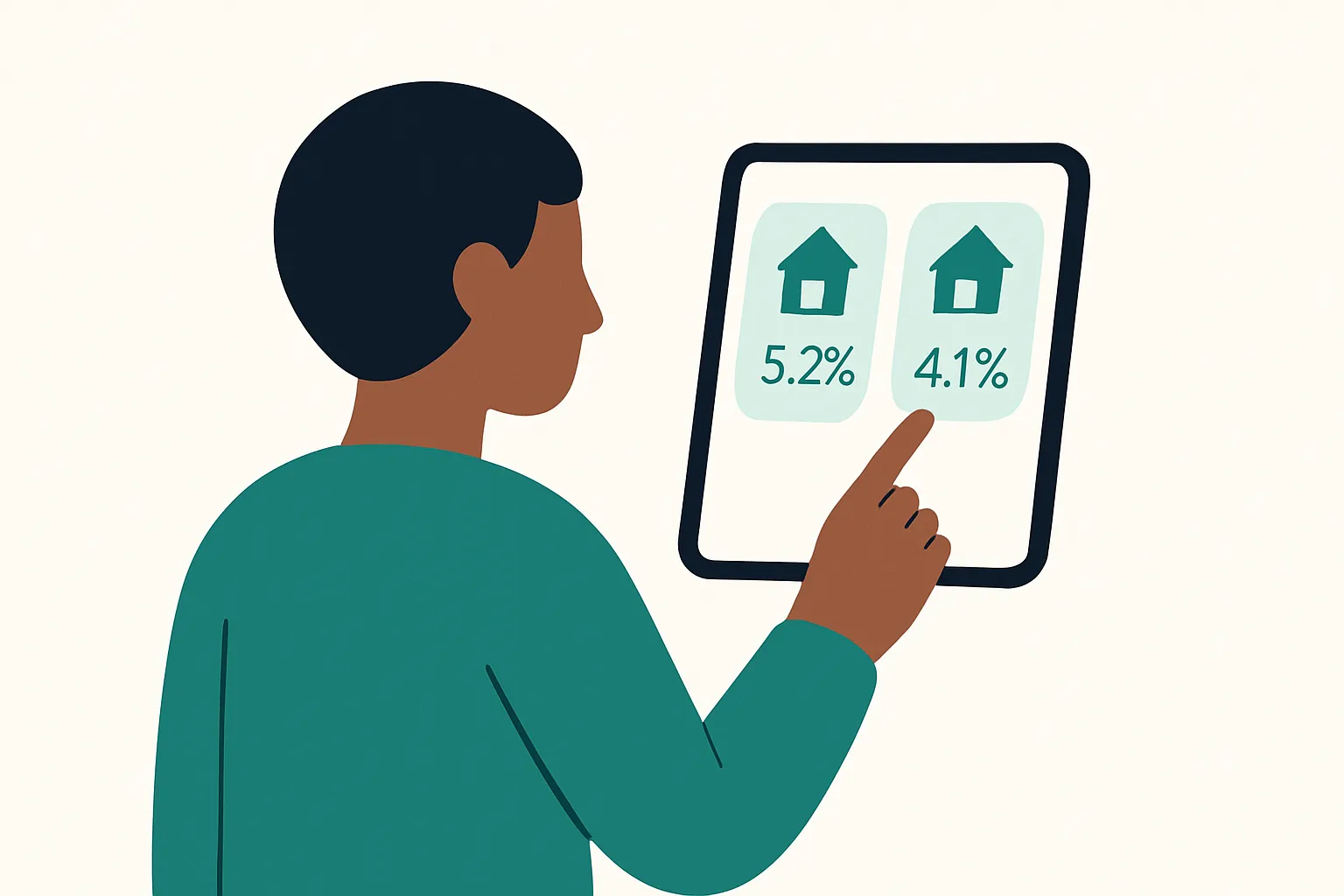
There’s a genuine, factual difference between two things that can feel similar: comparing advertised interest rates (or getting a broker’s preliminary assessment based on the numbers you give them) on one hand, and submitting a formal loan application to a lender on the other. The first generally doesn’t involve a lender running a formal check on your credit file. The second usually does, and that check is typically recorded on your file as an enquiry. Knowing which step you’re on matters if you’re trying to shop around without accumulating unnecessary formal applications.
What’s a credit enquiry?
A credit enquiry is a record, held on your credit file, of a formal check a credit provider made when you applied for finance. It sits alongside other information credit reporting bodies hold about you — like accounts and repayment history — and lenders can see it when they assess a future application. It’s distinct from simply looking at a lender’s advertised rates, which involves no check on your file at all.
What’s the difference between comparing rates and applying for a loan?
Comparing advertised rates — including the comparison rate lenders are required to publish alongside their advertised rate, which folds in most fees and charges to give a more like-for-like figure — doesn’t require you to submit any application. Getting a preliminary assessment from a mortgage broker, based on the income, expenses and existing debts you tell them about, is also a different step to lodging a formal application with a specific lender. A formal application is the point at which a lender or broker typically needs to run a credit check as part of verifying your circumstances.
Does every formal application show up as an enquiry?
Generally, yes. When you lodge a formal application, the credit provider assessing it typically needs to access the information held in your credit file. As at July 2026, the Office of the Australian Information Commissioner (OAIC) describes this as one of the categories of information a credit reporting body can hold on your file: a record that a credit provider has requested access to your credit report in connection with an application you made for credit — an “information request”, more commonly known as a credit enquiry — logged alongside the type and amount of credit you sought. It’s this record, not the earlier step of comparing rates or getting a broker’s preliminary estimate, that ends up on your file.
What does this mean for shopping around?
You can review advertised rates and comparison rates across multiple lenders, and talk through your situation with a broker, without necessarily submitting a formal application to any of them. Where you do decide to lodge one or more formal applications — because you’ve narrowed down which product and lender suit you — that’s the stage a credit check typically comes into it. Some buyers choose to narrow their options first and apply once they’re reasonably confident, rather than applying to several lenders in parallel; others prefer to see actual approved terms from more than one lender before deciding. Both are ways of approaching the same trade-off, not a right and a wrong answer.
""
Where can I check the current detail on credit enquiries?
As at July 2026, Moneysmart — ASIC’s free consumer website — and the OAIC both publish current guidance on how credit reporting works in Australia. The detail above on how a credit enquiry is recorded draws on OAIC’s published description of what a credit reporting body can hold on your file; check either site directly for the fuller picture, including how to request your own free credit report.
Your credit score is only one input a lender considers alongside everything else in your application — see our guide to how your credit score affects a home loan in Australia for more on how it fits into the wider picture.
For a broader look at what it takes to get into your first home, see our guide to how much deposit you need for a first home in Australia.