What is a home loan comparison rate and why does it matter?
A comparison rate combines a home loan's interest rate and most fees into one figure lenders must advertise — what it includes, and where it falls short.

What is a home loan comparison rate?
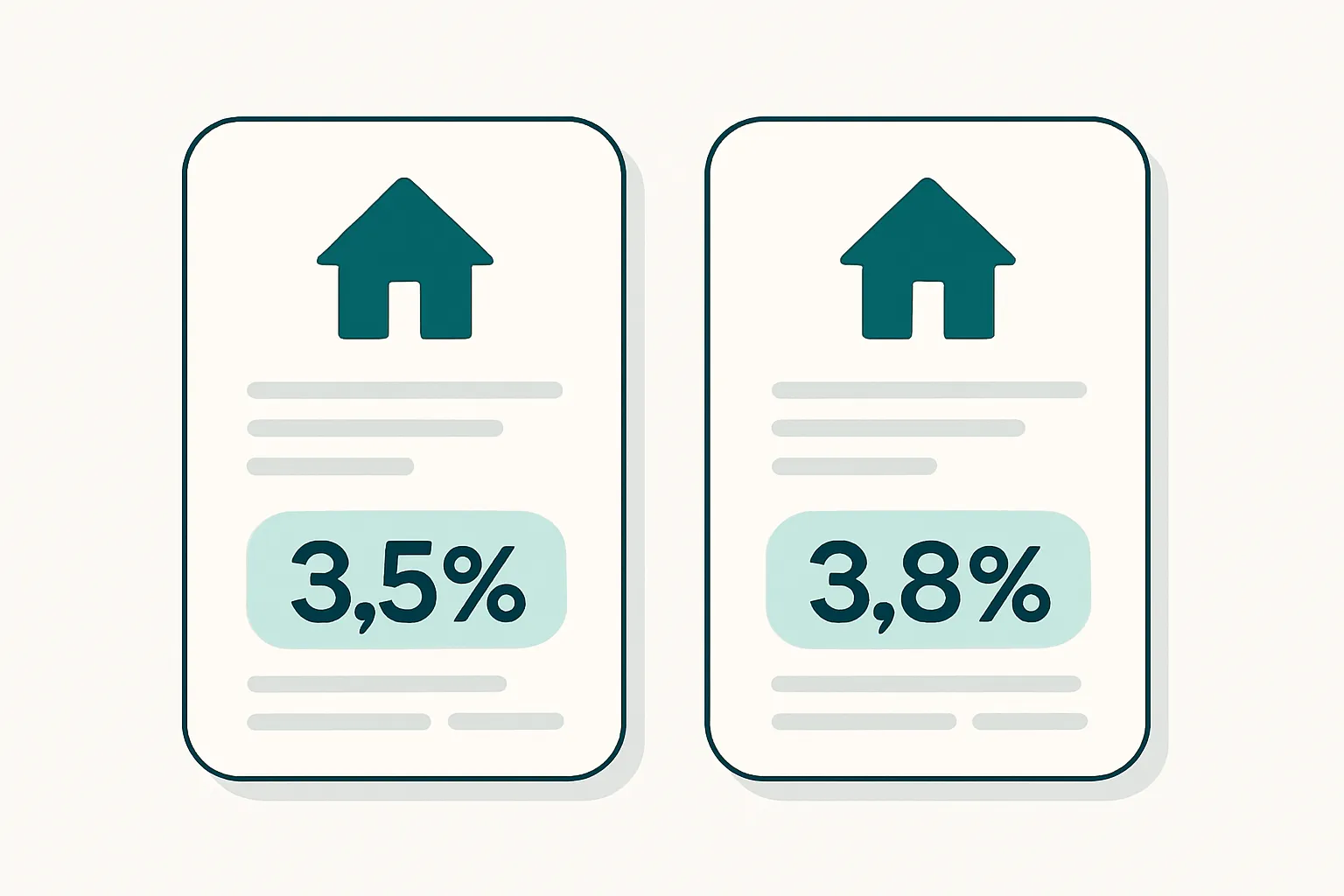
A comparison rate is a single percentage figure that combines a home loan’s interest rate with most of its fees and charges, so you can compare the overall cost of two loans side by side rather than judging them on the advertised interest rate alone. Lenders advertising credit products in Australia, including home loans, are required to display a comparison rate alongside the interest rate — it’s a standard feature of any home loan advertisement, not something individual lenders opt into.
The comparison rate is always higher than, or equal to, the advertised interest rate, because it folds in costs the interest rate alone doesn’t show.
What does a comparison rate include and exclude?
| Comparison rate includes | Comparison rate typically excludes |
|---|---|
| The advertised interest rate | Government charges (e.g. mortgage registration) |
| Most upfront fees (e.g. application, valuation) | Fees that depend on how you use the loan (e.g. redraw) |
| Ongoing fees (e.g. annual or monthly account fees) | Early exit or break costs |
| A standardised loan amount and term (see below) | Optional add-on products |
A comparison rate is broadly: the interest rate plus most known fees and charges, recalculated as a single annual percentage rate on a standardised loan amount and term.
Because different lenders’ loans are measured against the same assumed loan amount and term, the comparison rate lets you compare like with like — a loan with a lower advertised rate but higher fees can end up with a higher comparison rate than a loan with a slightly higher rate and lower fees. The comparison rate is calculated on a $150,000 loan over a 25-year term, as prescribed by the National Consumer Credit Protection Act 2009 and the National Credit Code (Schedule 1).
Why do lenders have to publish a comparison rate?
Comparison rates exist because the interest rate alone doesn’t tell you what a loan actually costs to run. Two loans advertised at the same interest rate can have different comparison rates once application fees, ongoing fees and other charges are factored in. Moneysmart, the Australian Government’s free consumer finance website run by ASIC, publishes guidance on reading and comparing home loan costs, including comparison rates.
What are the limits of a home loan comparison rate?
A comparison rate is useful, but it isn’t a complete picture of what a loan will cost you:
- It assumes a standard scenario. The comparison rate is calculated on a set loan amount and term — a $150,000 loan over a 25-year term, as prescribed by the National Consumer Credit Protection Act 2009 and the National Credit Code (Schedule 1) — not on your actual loan size or the term you choose — the gap between the advertised rate and the comparison rate will differ for a loan larger or smaller than the standard one.
- It excludes some fees. Government charges, and fees that only apply if you use a particular feature (like redraw or an extra repayment), generally aren’t included.
- It only compares like with like. A fixed-rate loan’s comparison rate should be weighed against another fixed-rate loan, and a variable rate against another variable rate — comparing across loan types on the comparison rate alone can be misleading, since the two products behave differently over time. Our guide to fixed and variable interest rates covers that distinction.
- It doesn’t rank features. A packaged loan with an annual fee may bundle a linked credit card or fee waivers that the comparison rate doesn’t value one way or another — see our guide to basic vs packaged home loans.
As at July 2026, home loan interest rates generally sit close to the RBA’s cash rate — currently 4.35%, last reviewed 16 June 2026 — but a lender’s advertised rate and its comparison rate move independently of the cash rate once that lender sets its own pricing and fees.
Using the comparison rate alongside everything else
The comparison rate is one input, not the whole decision. Your own loan amount, the term you want, which features you’ll actually use, and how the loan is likely to perform if your circumstances change all sit alongside it. A licensed mortgage broker or a lender’s representative can walk through how a specific loan’s comparison rate applies to your situation — this article can only explain what the figure is and how it’s built.
Our guide to how much deposit you need for a first home covers the other side of the borrowing equation.